May 30, 2026 · 8 min read
Winter Septic Care: How to Keep Your System Healthy Through an Indiana Cold Snap
Southern Indiana winters can be genuinely hard on a septic system. Freezing temperatures, frozen ground, and the holiday rush of extra guests all stack up at the same time of year, and the result is that winter is when a lot of avoidable septic problems show up. The reassuring part: nearly all of them are preventable with a little planning.
In this guide we will walk through how cold weather actually affects your system, the steps to take before the first hard freeze, how to keep things flowing through the coldest months, and how to handle the extra load that the holidays bring. A few simple habits make the difference between a quiet winter and an emergency call on the coldest night of the year.
How cold weather stresses a septic system
A septic system depends on two things that winter works against: water moving freely through the pipes, and a population of bacteria in the tank breaking down waste. Hard freezes can freeze pipes and components, especially if part of the system sits unused for a stretch. And the cold slows the biological activity in the tank, so waste breaks down a little more sluggishly than it does in summer.
On top of that, frozen ground makes the tank harder to access if you do need service, and compacted, frozen soil over the drain field is more vulnerable to damage. None of this is cause for alarm — it just means winter rewards a bit of preparation.
Before the freeze: pump and prepare
If your tank is anywhere close to due, fall is the ideal time to pump. Once the ground freezes hard, locating and accessing the tank gets more difficult, and an overdue tank is more likely to cause trouble during the busiest, coldest stretch of the year. Getting ahead of it in autumn means one less thing to worry about when temperatures drop.
This is also the time to deal with any small problems you have been putting off — a dripping fixture, a slow drain, a soft spot in the yard. Small issues become big ones faster in winter. The seasonal checklist below covers the key preparation steps.
Early fall: Pump if due
If your tank is near its 3–5 year interval, pump before the ground freezes while access is easy.
Fall: Fix leaks and slow drains
Repair dripping fixtures and address sluggish drains before cold weather makes them worse.
Before first freeze: Insulate the lines
Leave mulch or undisturbed snow over the tank and lines as natural insulation; keep vehicles off the field.
Through winter: Keep water flowing
Regular, spread-out water use helps prevent freezing. Avoid letting the system sit unused for long stretches.
Keeping things flowing through the cold
Frozen pipes and components are the most common winter septic headache, and the best defense is keeping the system gently active. Regular water use helps warm water move through the lines, and fixing drips keeps small trickles from freezing into blockages. Counterintuitively, a layer of mulch — or even an undisturbed blanket of snow — over the tank and lines actually insulates them against the cold, so resist the urge to clear snow off that part of the yard.
Keep heavy vehicles off the drain field in winter. Compacted, frozen soil over the lines can crack pipes and damage the field, and the damage often is not discovered until spring. If you do lose flow or suspect a freeze, call rather than trying to thaw components yourself — improvised thawing can do more harm than good.
Surviving the holiday load
The holidays put a unique strain on septic systems. A house full of guests means far more water and waste flowing through in a short window, plus the cooking that comes with the season. The two biggest risks are overwhelming the tank with a sudden surge of water and clogging cold pipes with grease.
Spread out laundry and dishwasher loads across the days rather than running everything at once, so the system has time to process between surges. Keep cooking grease out of the drains entirely — it congeals fast in cold pipes and is one of the leading causes of holiday backups. And if you are hosting a full house and your tank is anywhere near due, a pre-holiday pump-out is genuinely cheap insurance against the most inconvenient backup of the year.
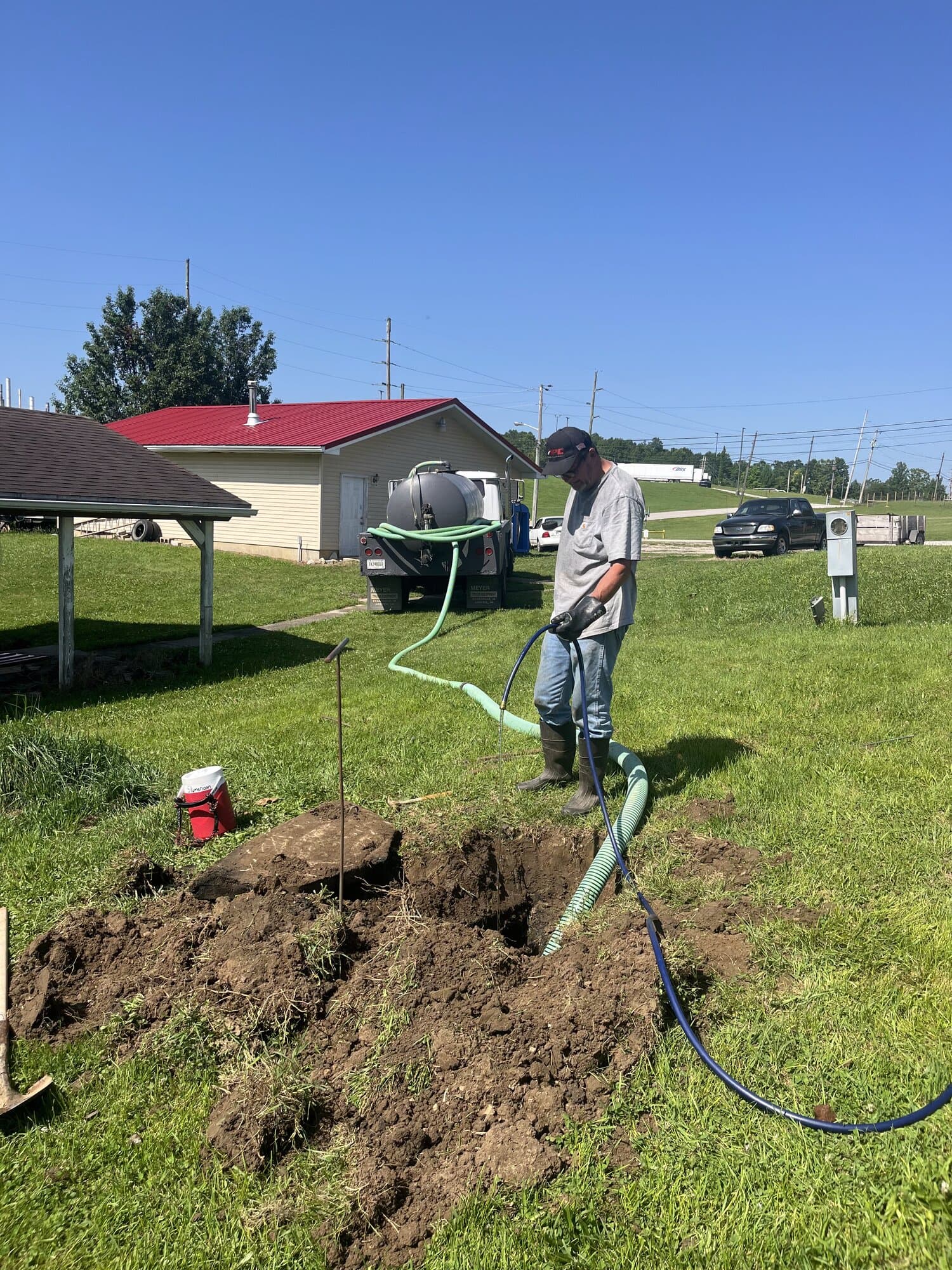
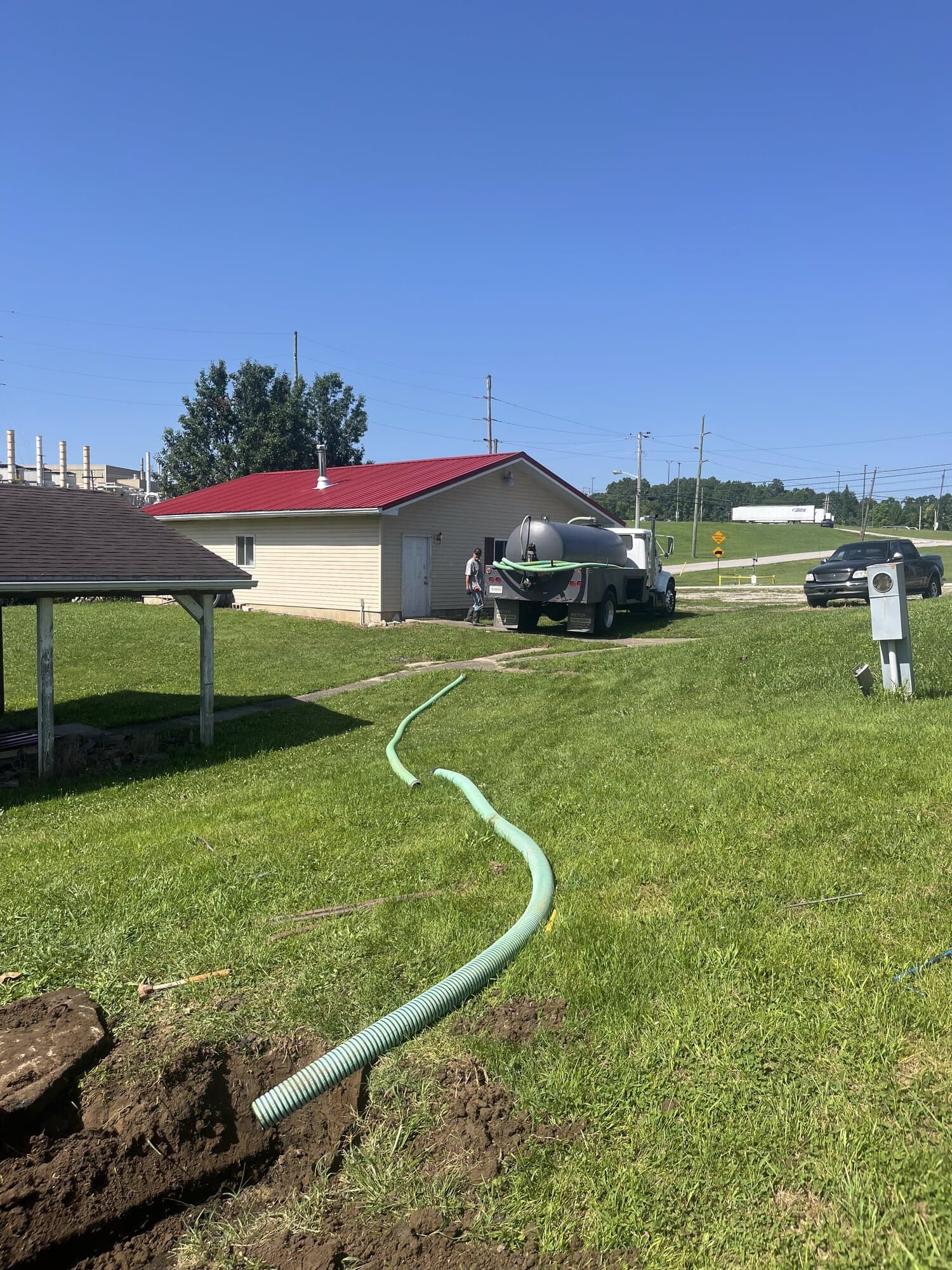
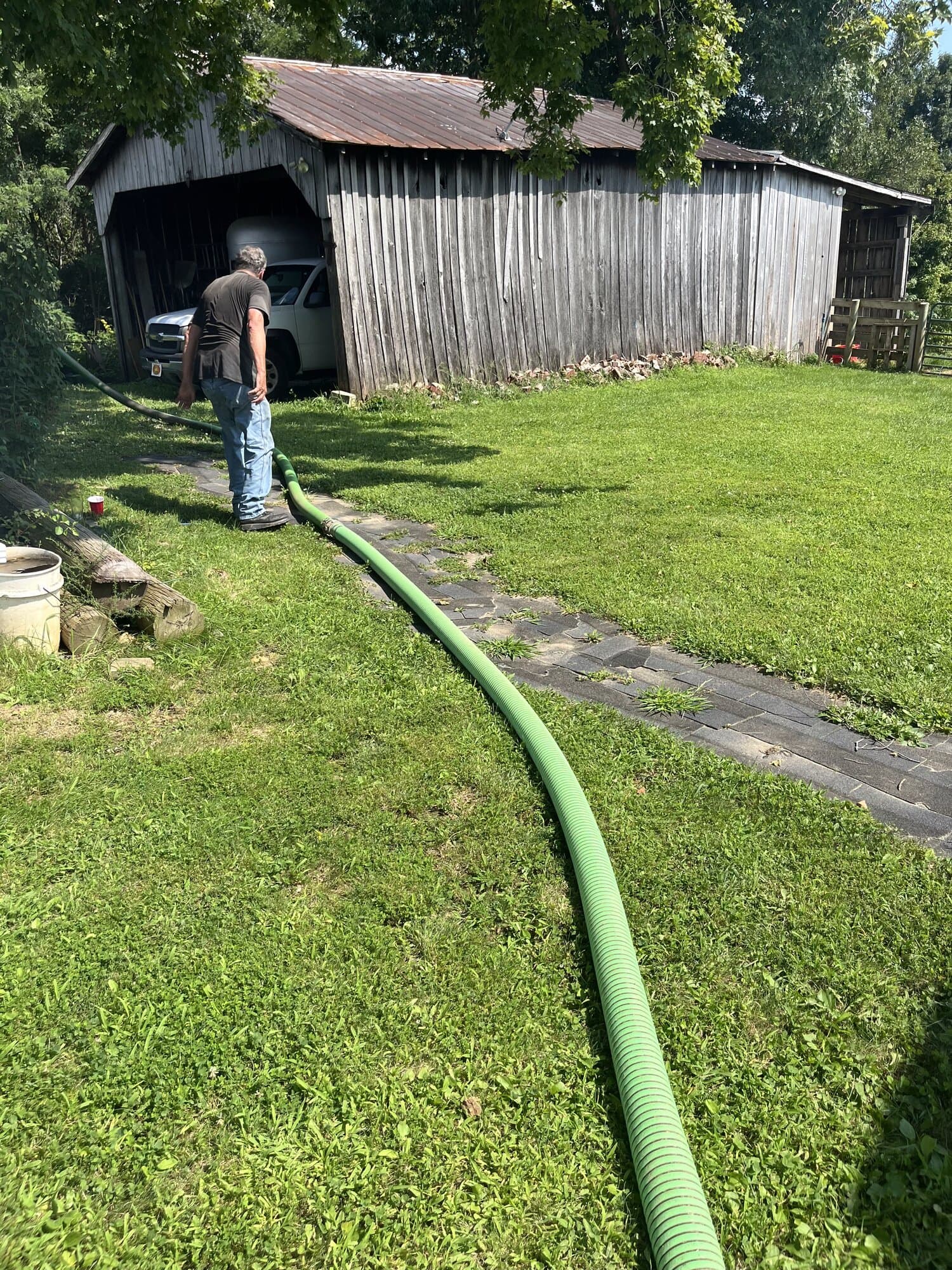
The photo here shows our crew on a job in the field. Whatever the season, we would rather help you prepare ahead of time than meet you on the coldest night of the year because a system froze or backed up.
Frequently Asked Questions
Should I pump my septic tank before winter?
If your tank is approaching its scheduled interval, fall is an ideal time to pump. It avoids the difficulty of accessing a tank through frozen ground and reduces the risk of a backup during heavy holiday use.
Can a septic system freeze?
Yes. Pipes and components can freeze in extreme cold, especially if the system sits unused. Keeping water flowing, fixing leaks, and leaving insulating snow or mulch over the lines all help prevent it.
Why do septic backups spike around the holidays?
A full house sends a surge of water and waste through the system in a short time, and cooking grease congeals in cold pipes. Spreading out water use and keeping grease out of drains prevents most holiday backups.
Ready to schedule service?