June 2, 2026 · 8 min read
How Often Should You Pump Your Septic Tank? The Real Answer for Indiana Homeowners
"How often should I pump my septic tank?" is the question we hear more than any other, and the honest answer is more nuanced than the rule of thumb you have probably seen. Most homes do well on a three-to-five-year schedule — but whether you land on three or five depends on a few specific things about your household.
In this guide we will explain where that range comes from, walk through the factors that shorten or lengthen your personal interval, and give you a simple way to figure out roughly where your home falls. Getting this right is the single most cost-effective thing you can do for your septic system.
Where the three-to-five-year rule comes from
Your septic tank works by letting gravity do the sorting. Solids sink to the bottom and form a sludge layer; greases and lighter material float to the top as a scum layer; and the relatively clear liquid in the middle flows out to the drain field. The tank is sized so that those sludge and scum layers can build up gradually over years without reaching the outlet.
The three-to-five-year window is simply how long it takes a typical household to fill those layers to the point where pumping is needed to keep solids from escaping to the field. It is a genuinely good rule for an average family in an average-sized tank. The trouble is that very few homes are exactly average.
The factors that change your interval
Two variables matter most: how many people live in the home, and how big the tank is. More people means more wastewater and faster solid buildup. A smaller tank fills sooner than a larger one. A full house of five or six on a 1,000-gallon tank may need pumping closer to every two to three years, while a retired couple on a 1,500-gallon tank might comfortably stretch toward five or even slightly beyond.
Lifestyle matters too. Heavy use of a garbage disposal adds a surprising amount of solids. Frequent laundry, a home business, or a basement apartment all push more water through the system. The chart below shows roughly how household size shifts the recommended interval for a standard tank — use it as a starting point, then adjust for your own habits.
General guidance for a typical 1,000-gallon tank. Larger tanks extend these intervals; heavy water use shortens them.
Years between pump-outs
How to estimate your own schedule
Start with the chart above for your household size, then adjust. If you run a garbage disposal daily, do laundry most days, or have more people in the home part of the year, move toward the shorter end. If your household is small and your water use is light, you can lean toward the longer end.
If you do not know your tank size, that is worth finding out — your septic permit, a previous service record, or a quick inspection can tell you. And if you genuinely cannot remember when the tank was last pumped, treat that as a strong signal to schedule a service now and start your record from there.
Why a schedule beats waiting for symptoms
The best septic systems are the ones you never have to think about, and that is exactly the argument for getting on a schedule. When you pump on a regular interval, you never discover that your tank was overdue at the worst possible moment — a holiday weekend with a full house and every drain in the home backing up at once.
A schedule also protects the most expensive part of the system. Every pump-out you do on time is a pump-out that keeps solids out of the drain field, and the drain field is what costs thousands to replace. The few hundred dollars and one short visit every few years is genuinely one of the best deals in home maintenance.
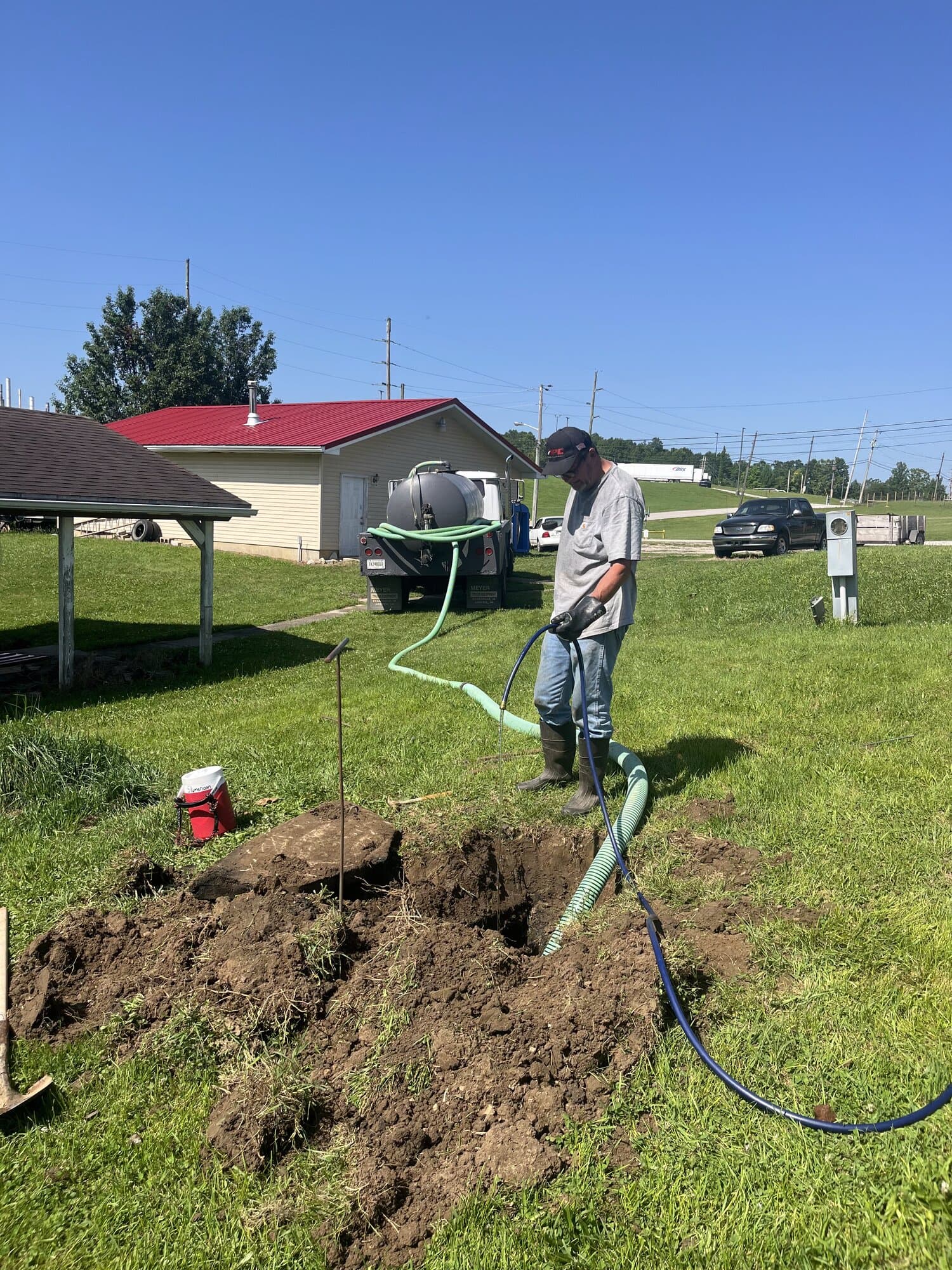
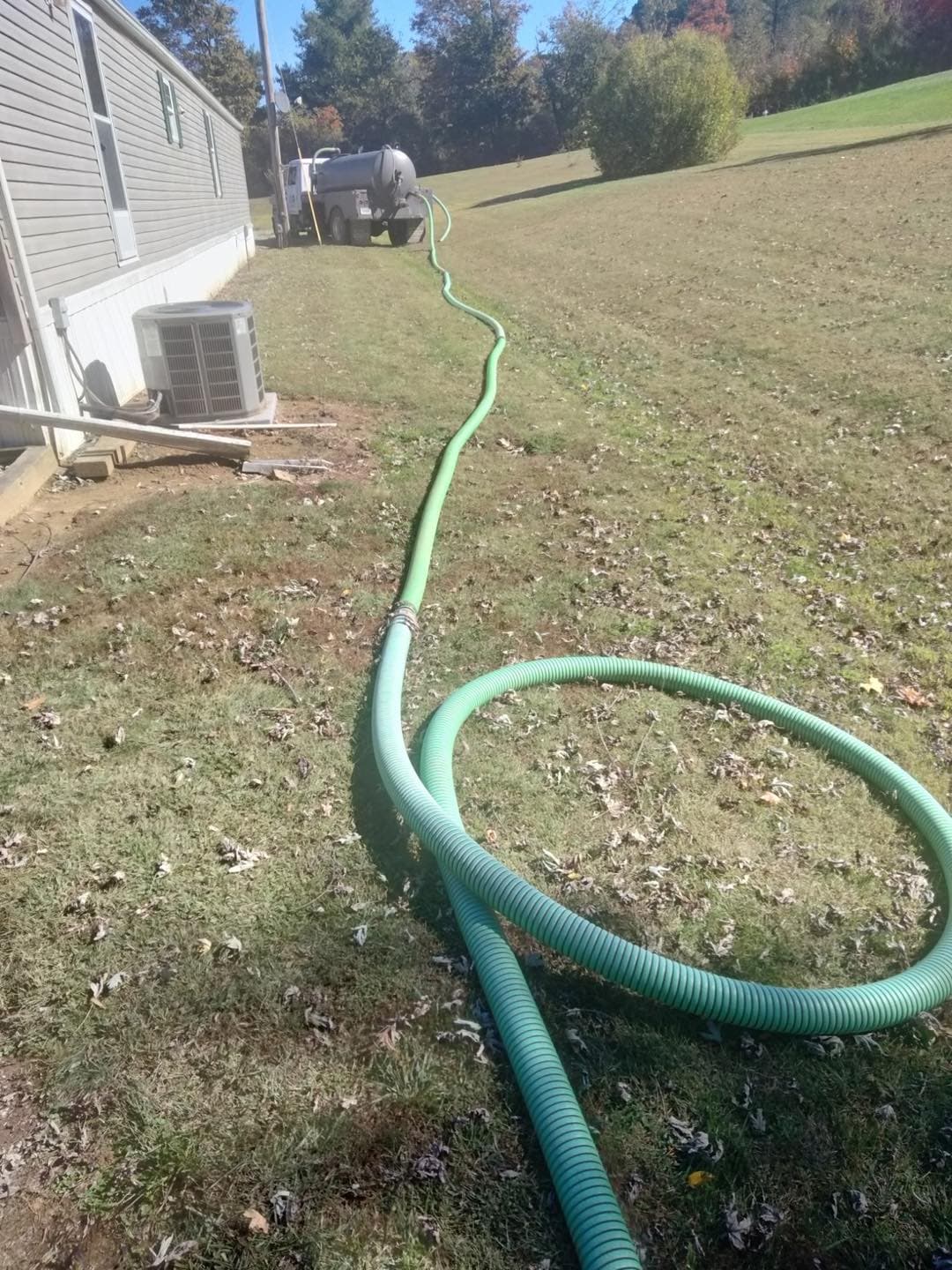
The photo here shows a routine, scheduled service in progress — the kind of uneventful visit that keeps a system healthy for decades. We are always glad to help you set a reminder so the next one comes around before there is ever a problem.
Frequently Asked Questions
How often should a septic tank be pumped?
Most households should pump every three to five years. Larger families, smaller tanks, and heavy water use push toward every two to three years, while small households with large tanks can sometimes stretch to five.
Does tank size change how often I pump?
Yes. A larger tank holds more sludge and scum before pumping is needed, so a 1,500-gallon tank generally goes longer between pump-outs than a 1,000-gallon tank serving the same household.
What happens if I never pump my tank?
Solids eventually overflow into the drain field, clogging the soil and causing backups. Drain field repairs cost thousands, which is why regular pumping is far cheaper than waiting for failure.
Ready to schedule service?