June 3, 2026 · 9 min read
How Much Does Septic Tank Pumping Cost in Southern Indiana? A Complete 2026 Guide
If you have ever tried to find out what septic pumping costs, you have probably run into a wall of vague answers and "it depends." We think that is backwards. Pricing should be one of the easiest parts of owning a septic system to understand, not one of the most confusing. So in this guide we are going to lay it all out: the real numbers, every factor that nudges them up or down, and the one mistake that turns an affordable service into an expensive emergency.
Here is the headline up front, because you deserve a straight answer: a standard residential septic pump-out with Quick Pump and Clean starts at $325 for a 1,000-gallon tank within our primary Southern Indiana service area. Everything else in this article explains what that covers, what can change it, and how to make sure you are paying for routine maintenance instead of crisis repair.
What the base price actually covers
When we quote $325 for a standard pump-out, that is not a teaser number that balloons the moment our truck pulls into your driveway. It is the genuine cost of a complete, professional service on a typical 1,000-gallon residential tank.
That price includes arriving with our fully equipped pump truck, locating the tank access, pumping out all of the accumulated solids and liquids, a visual inspection of the tank's condition, a check of the inlet and outlet baffles, and proper disposal of the waste at an approved facility. In other words, you are not just paying for someone to empty a tank — you are paying for a trained set of eyes on the most expensive system in your yard.
Most standard residential homes in our area fall squarely into that base range. The factors that move the number, which we will cover next, are real but predictable, and we will always tell you the price before any work begins.
What can change the price (and by how much)
A handful of honest variables affect the final cost. The biggest one is tank size. A standard tank holds about 1,000 gallons, but larger homes often have 1,250- or 1,500-gallon tanks. More volume means more material to pump and dispose of, so the price rises with the size.
The second factor is how long it has been since the last service. A tank pumped on schedule is straightforward. A tank that has gone ten or fifteen years without attention often has heavy, compacted sludge that takes extra time and sometimes crud busting to break up and remove. The third factor is distance — if you are well beyond our primary coverage area, a modest premium may apply for the extra drive. Finally, if your tank lid is buried and nobody knows exactly where it is, locating and excavating the lid adds a small fee.
The chart below shows realistic ranges so you can see roughly where your situation lands. These are typical figures, not a quote — your exact price always comes before we start.
Representative ranges by scenario. Your exact price is quoted upfront before any work begins.
Approximate cost (USD)
Why the real cost is waiting too long
Here is the part of this guide that matters most for your wallet, and it is the reason we wrote it. A routine pump-out is a few hundred dollars. A failed drain field — the underground network of pipes and gravel that disperses treated water back into the soil — can run from several thousand dollars to well over ten thousand to repair or replace.
The math is not subtle. Your septic tank's whole job is to hold solids back so that only liquid flows out to the drain field. When a tank goes too long without pumping, the solids build up, overflow the baffles, and push out into the field. Once they clog the soil, the damage is done, and soil does not un-clog itself. You are then looking at excavation, new lines, and sometimes a brand-new field.
Think of pumping as the cheapest insurance policy your home has. The tank protects the drain field, and regular pumping protects the tank. The timeline below shows exactly how a skipped service turns into a major bill.
Years 0–5: On schedule
Tank is pumped every 3–5 years. Solids stay contained, the drain field stays clean. Cost: a few hundred dollars per visit.
Years 5–8: Overdue
Sludge and scum layers thicken. Drains slow, occasional odors appear. Still fixable with a pump-out, maybe crud busting.
Years 8+: Solids reach the field
Solids overflow the baffles and enter the drain field, clogging the soil. Backups and soggy spots appear in the yard.
Drain field failure
Clogged soil cannot be cleaned. Repair or replacement of the field runs from several thousand to $15,000+.
How to keep your costs low
The good news is that controlling septic costs is mostly about consistency, not luck. Pump on a regular schedule — every three to five years for most households — and you will almost never see the expensive end of the spectrum.
Be mindful of what goes down your drains, too. Grease, wipes labeled "flushable" (they are not), feminine products, and harsh chemicals all shorten the interval between pump-outs or damage the bacteria your tank relies on. Spreading out heavy water use, like running multiple loads of laundry across the week instead of all on Saturday, gives your system time to work.
And keep records. Knowing when your tank was last pumped is half the battle. If you genuinely cannot remember, that by itself is a sign it is time. We are always happy to help you set up a reminder so the next service comes around before there is ever a problem.
A quick look at the work itself
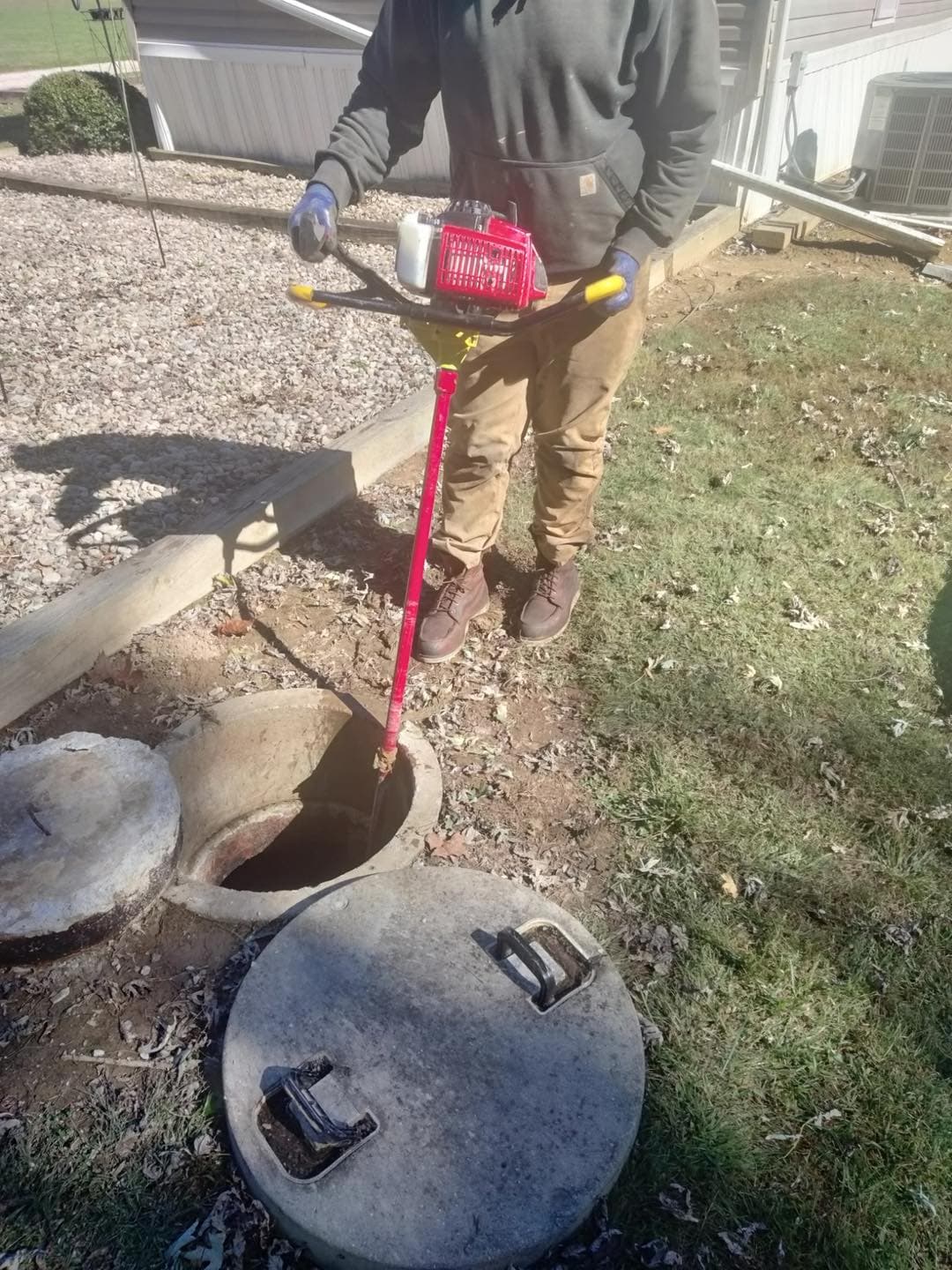
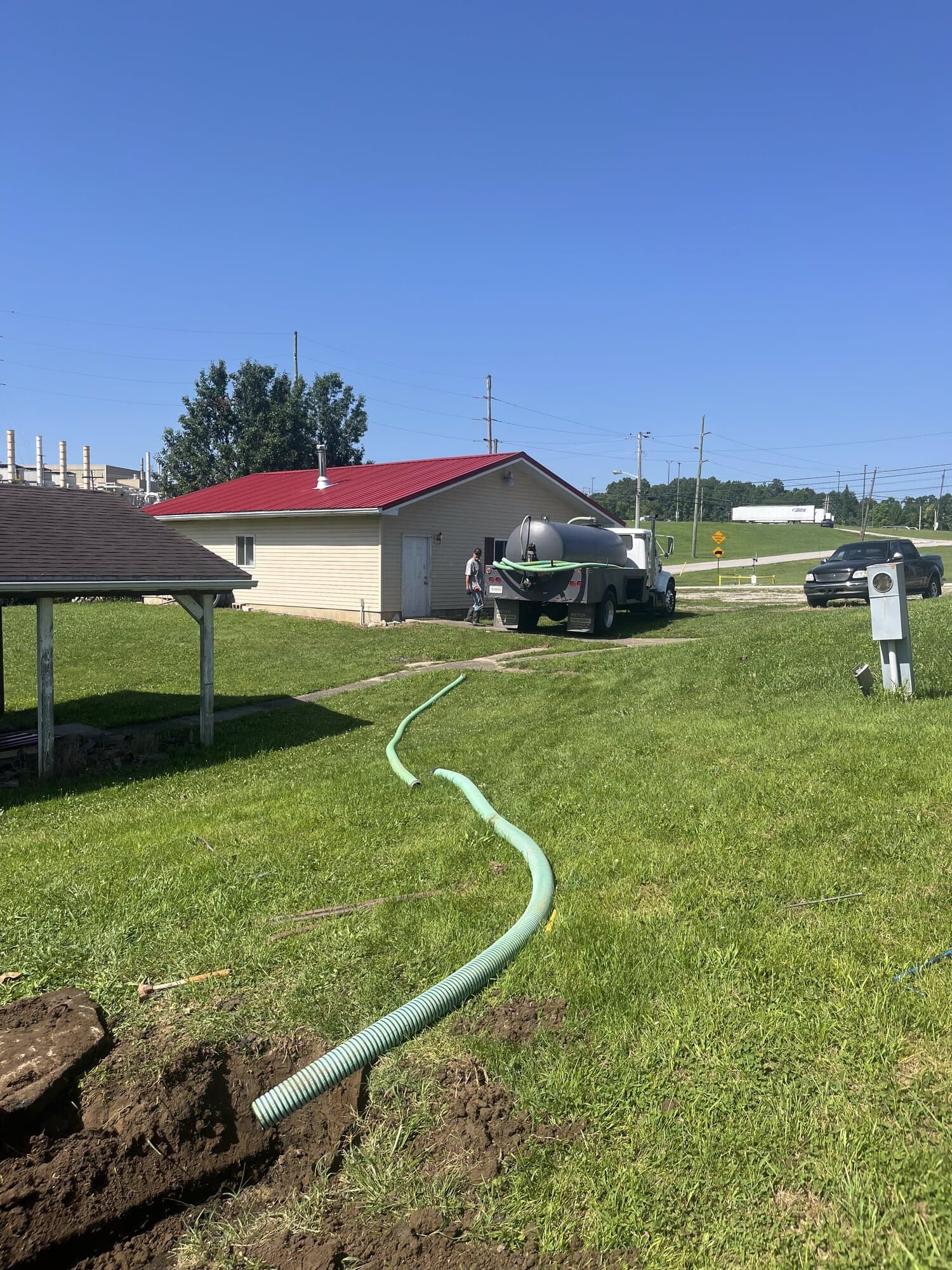
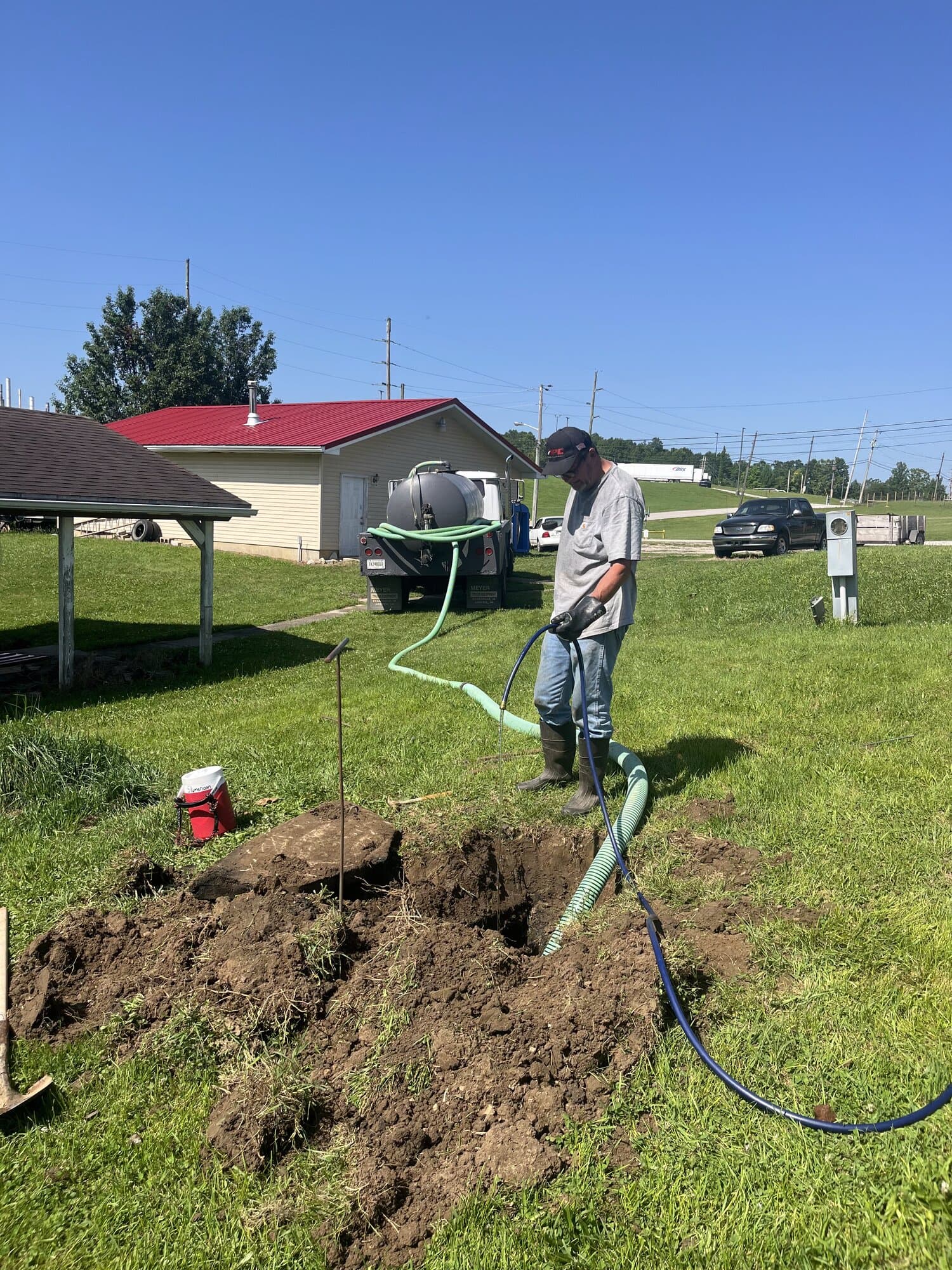
People are often surprised by how straightforward a professional pump-out is when the tank is accessible. We locate the lid, open the access port, and use the truck's vacuum system to remove the contents while inspecting the tank as we go. For most standard tanks the whole visit takes well under an hour.
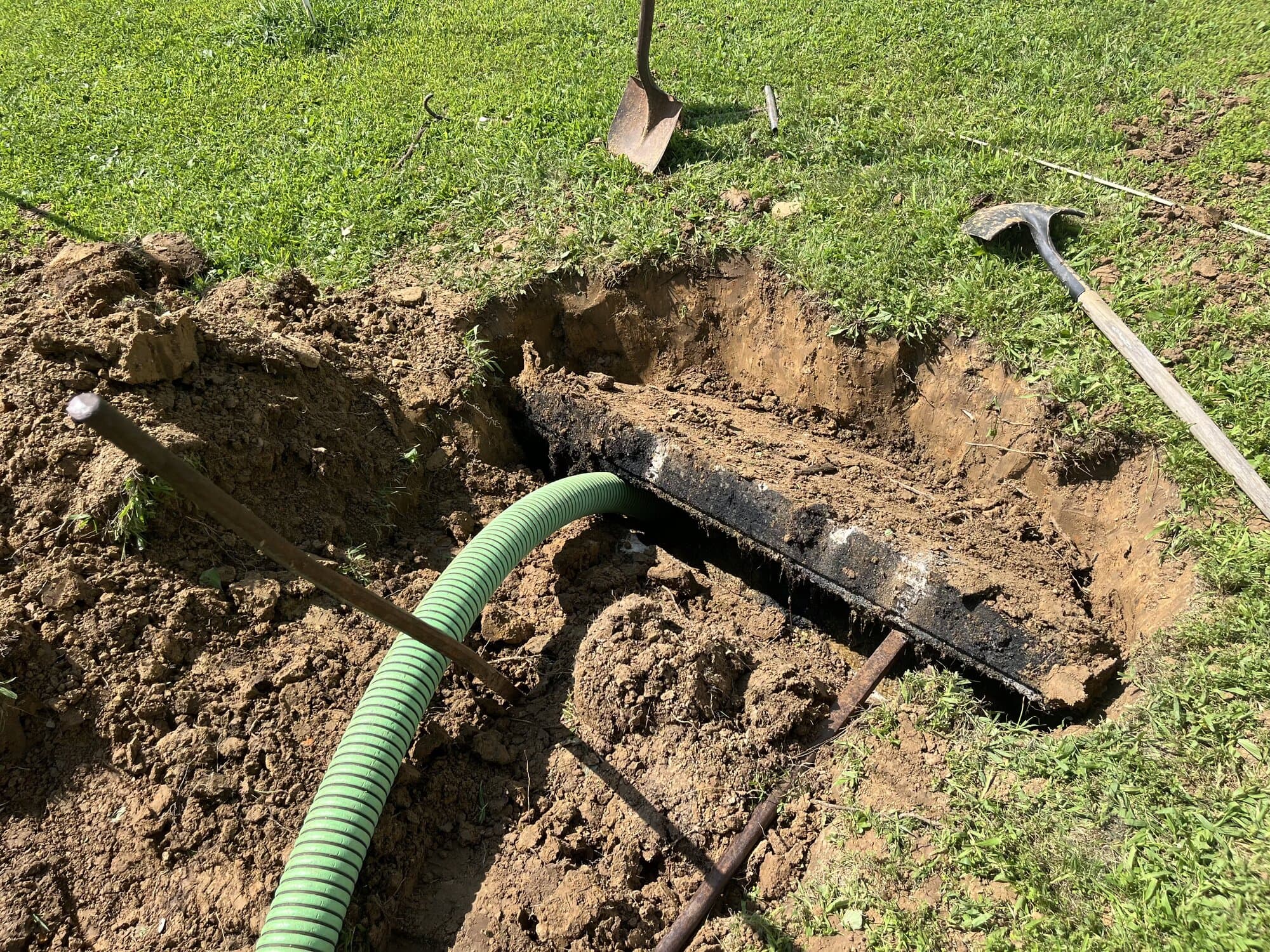
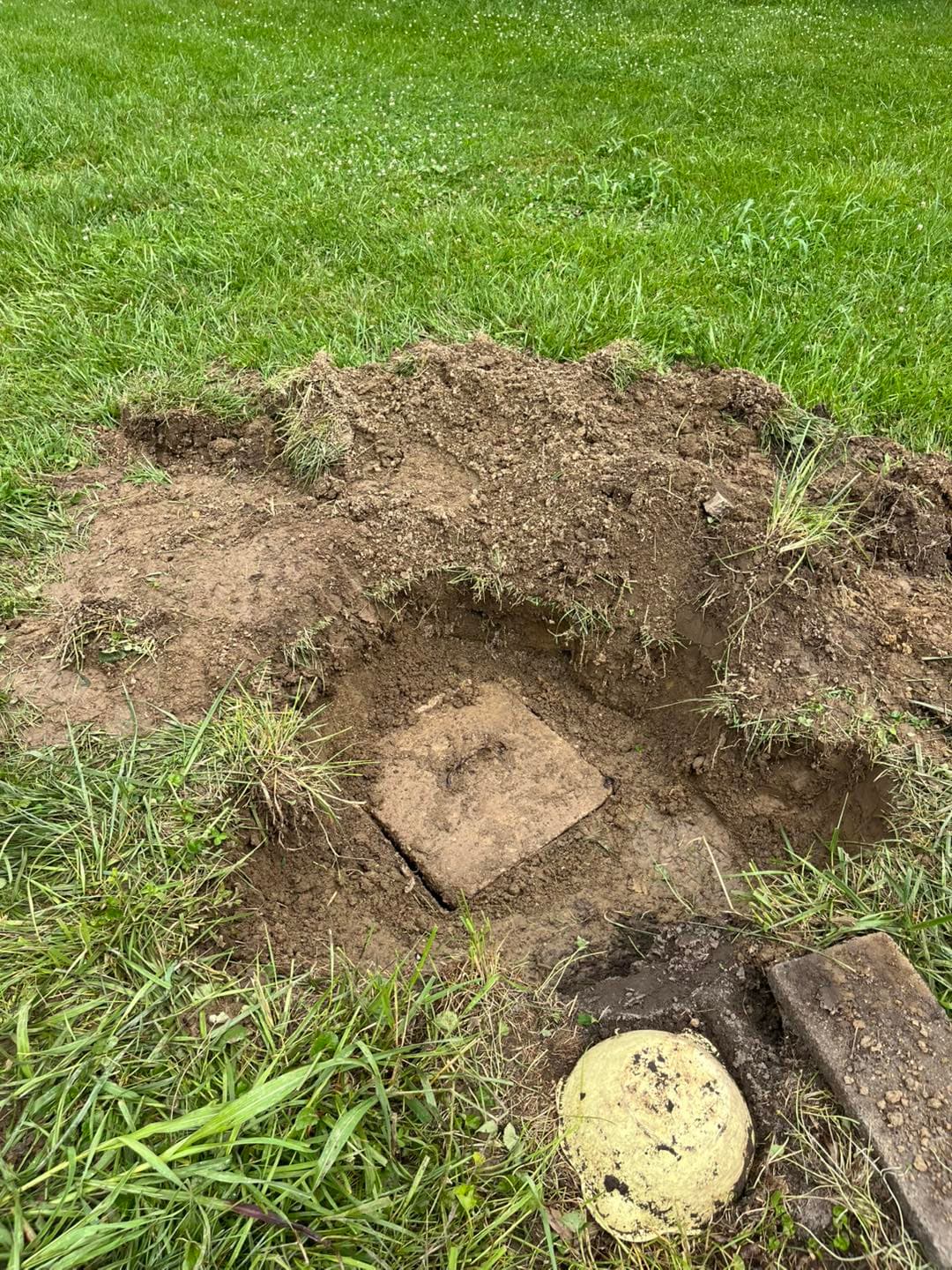
When the lid is buried — which is common on older rural properties where landscaping has changed over the decades — locating and excavating it is the part that adds time and the small extra fee. The photo here shows an excavated tank lid from one of our jobs, the step that has to happen before pumping can even begin on a buried tank.
Frequently Asked Questions
How much does it cost to pump a septic tank in Indiana?
With Quick Pump and Clean, a standard 1,000-gallon residential pump-out starts at $325 within our primary Southern Indiana service area. Larger tanks, heavily neglected tanks, or distant locations may cost more. We always quote the full price before starting work.
Why is my septic quote higher than the base price?
The most common reasons are a larger-than-standard tank, years of accumulated sludge that needs extra removal or crud busting, a buried lid that needs locating and excavation, or a location well outside our primary area. We explain any difference before we begin.
Is it cheaper to wait until there's a problem?
No — it is far more expensive. A routine pump-out costs a few hundred dollars; a failed drain field caused by skipped maintenance can cost several thousand to over fifteen thousand dollars to repair. Regular pumping is the cheapest way to protect your system.
Ready to schedule service?